
In the U.S., President Joe Biden’s proposed defense budget increase of 50%, to $1.5 trillion, would add to a budget deficit already close to 6% of GDP. Meanwhile, Germany has lifted its “debt brake” – a fiscal rule that limits borrowing – in order to fund additional spending, with new borrowing this year expected to hit nearly 200 billion euros. Over in Japan, Prime Minister Fumio Kishida’s government has promised a hefty increase in spending, including military and energy security measures, as part of a $117 billion supplementary budget, which will be financed through new debt issuance.
Key Takeaways:
- Fiscal slippage is widespread. Governments in the U.S., Germany, and Japan are increasing spending, leading to larger deficits and rising debt.
- Higher debt, higher yields. As borrowing increases, bond prices may fall, and investors may demand higher yields to absorb the increased risk.
- Central banks pull back. With central banks scaling back bond-buying programs, markets may face more volatility.
- Risks from short-term borrowing. Governments relying on short-term debt are at risk of higher refinancing costs in the future.
- Bond buyers must stay informed. Keep track of fiscal health, debt levels, and government policies to make more informed investment decisions.
Fiscal Slippage on the Rise: A Global Problem
Fiscal slippage is becoming more common across the globe. In the United States, the government is on track to increase its defense spending by 50%, with President Biden’s proposal to boost defense funding to $1.5 trillion. This would significantly widen a budget deficit already hovering around 6% of GDP. As the U.S. borrows more to fund its military and other priorities, bond buyers are at risk of losing money as the value of government bonds decreases and yields rise. Investors are increasingly demanding higher returns to absorb this risk.
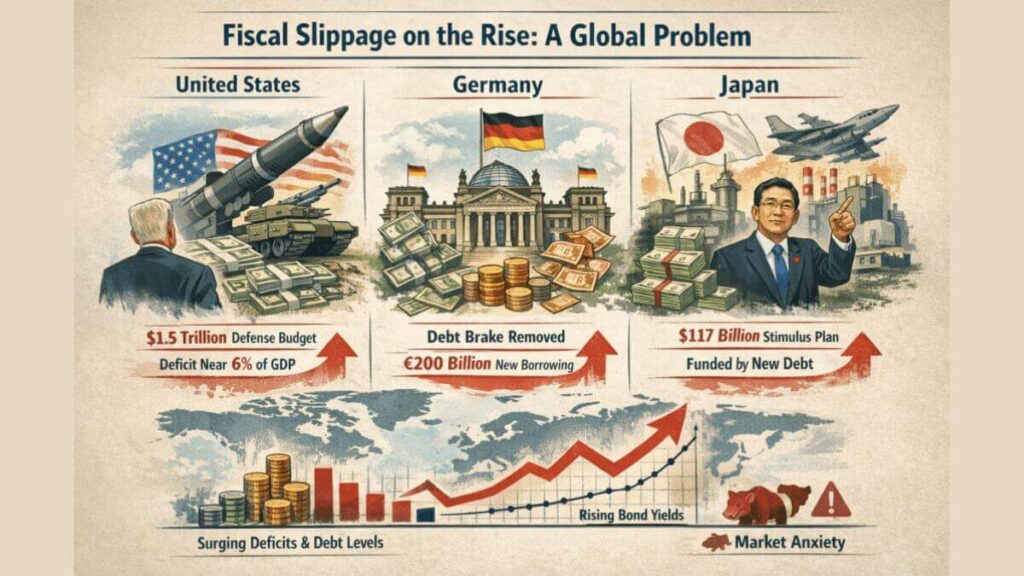
In Germany, the government has removed its “debt brake,” a fiscal rule that limited borrowing, in order to fund defense spending and other projects. This year’s new borrowing is expected to reach nearly 200 billion euros. Meanwhile, Japan’s fiscal situation is also under pressure, with Prime Minister Fumio Kishida promising massive increases in spending on defense and energy security, as well as tax cuts. A $117 billion supplementary budget will be financed largely through new debt issuance, adding to the country’s already heavy debt load.
Bond Markets Face Growing Pressure
With rising deficits and debt levels, bond markets are under increasing strain. As governments borrow more money to cover spending, they must issue more bonds. This oversupply can push bond prices down, raising yields in the process. Investors may demand higher yields to compensate for the growing risk of holding government debt.
In the U.S., the Federal Reserve has already begun scaling back its bond-buying programs, and central banks in Europe and Japan are also reducing their support for bond markets. This withdrawal of central bank support leaves bond markets more vulnerable, adding to the pressure on governments to manage their debt effectively. As bond yields rise, governments face higher borrowing costs, which can create a feedback loop of rising debt levels and interest rates.
Short-Term Borrowing Adds Risk
Governments are increasingly relying on short-term borrowing to meet their spending needs. While short-term debt has lower interest rates in the short run, it also increases the rollover risk—the risk that a government must refinance its debt more frequently as bonds mature. If market conditions change, refinancing costs can rise quickly, creating financial stress.
This is particularly risky in a world where bond yields are on the rise. Short-term debt can quickly turn into a burden if governments are unable to refinance at favorable rates. Bond buyers need to be aware of these risks when investing in government bonds, as rising interest rates could lead to a higher cost of borrowing for countries and increased market instability.
What Bond Buyers Should Do
For bond buyers, it is important to stay informed about the fiscal health of the countries they invest in. Keeping an eye on government budget proposals, debt levels, and fiscal policies can help investors understand the risks associated with their bond holdings. Diversifying investments is also key, as spreading risk across different types of bonds can help reduce the impact of rising yields in one market.

Investors should also pay attention to ratings agencies like Moody’s and Standard & Poor’s, which provide assessments of a country’s creditworthiness. Countries with higher deficits and rising debt may face downgrades, which could further destabilize bond prices and increase borrowing costs.