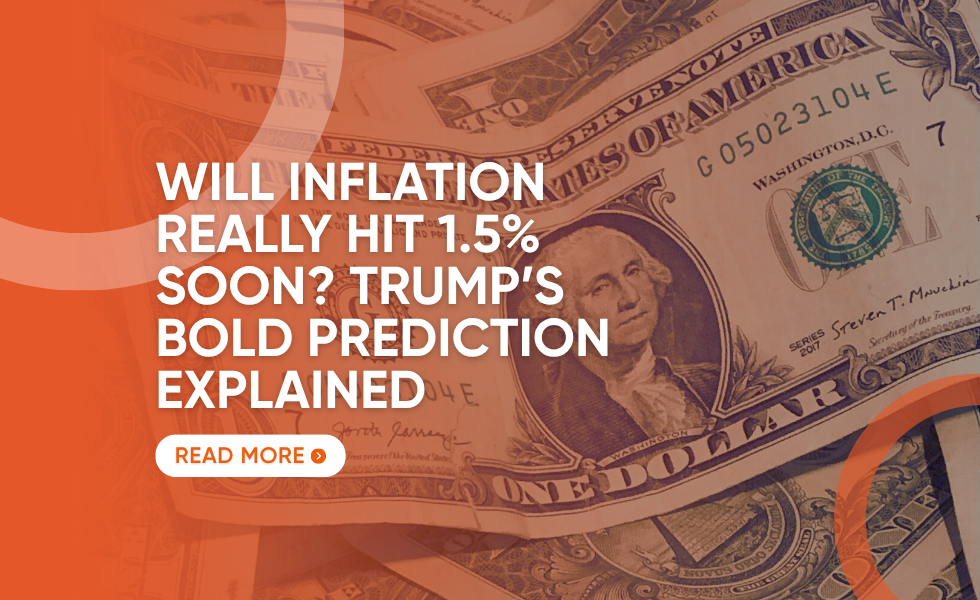



Donald Trump recently made a bold statement about inflation, claiming that it will drop to 1.5% “pretty soon.” This prediction has caught the attention of many, especially since inflation has been much higher in recent years. But what does this prediction mean for the economy? How realistic is it, and what would it take for inflation to reach such a low level?
Key Takeaways:
- Trump predicts that inflation will drop to 1.5% in the near future.
- Inflation is the rise in prices of goods and services over time.
What is Inflation?
Inflation is the term used to describe the increase in prices of goods and services over time. When inflation happens, the cost of everyday items—such as food, gas, and even rent—goes up. For example, if you bought a loaf of bread for $2 last year and it costs $2.20 this year, that price increase is due to inflation.
Inflation is measured using something called the Consumer Price Index (CPI), which looks at the average price changes for a basket of common goods and services. The CPI is used to track how much more (or less) people have to spend to buy the same things over time. A moderate level of inflation is generally considered normal in a growing economy, but when inflation gets too high, it can hurt people’s purchasing power, meaning their money doesn’t go as far.
Trump’s Prediction Explained
Recently, former President Donald Trump claimed that inflation will drop to 1.5% “pretty soon.” To understand this prediction, it’s important to first look at the current inflation rate. As of 2025, inflation is still well above 1.5%, and many Americans are feeling the pressure of rising prices.
But why did Trump make this claim? Trump is suggesting that with certain policies—like trade deals with countries such as India and Switzerland—prices for goods and services could decrease, which would lead to a drop in inflation. He also mentioned that energy prices and food prices have been going down, which could be factors in pushing inflation lower.
While it is possible for inflation to drop, predicting a specific figure like 1.5% is quite bold. Economists and analysts often warn that inflation is influenced by many unpredictable factors, including global events, government spending, and supply chain issues.
How Likely is It?
So, how likely is it that inflation will actually hit 1.5% soon? To answer this, let’s look at some of the factors that influence inflation.
- Energy Prices: Energy costs, such as the price of oil and gas, play a big role in inflation. When energy prices rise, the cost of transportation and heating also goes up, which can lead to higher prices for goods and services. If energy prices continue to drop, it could help lower inflation.
- Supply Chains: The availability of goods is another factor that affects inflation. When supply chains are disrupted, there can be fewer goods available, and prices tend to rise. However, if supply chains improve, inflation could decrease.
- Government Policies: Fiscal policies—like how much the government spends—also play a part in inflation. If the government spends too much, it can lead to higher inflation. On the other hand, policies that reduce government spending can help bring inflation down.
As of now, inflation in the U.S. is still much higher than 1.5%, and experts are not predicting such a sharp drop in the near future. However, if the right economic conditions align—such as a steady decline in energy prices and fewer supply chain disruptions—it is possible for inflation to slow down and become more manageable.
What Does It Mean for You?
If inflation were to drop to 1.5%, it could have a positive effect on your day-to-day life. Lower inflation means that prices for goods and services would increase at a slower rate, making it easier to afford things like food, gas, and other everyday expenses. Your money would stretch further, and you would have more purchasing power.
On the other hand, inflation that stays high can erode the value of your money, making it harder to keep up with rising costs. That’s why it’s important to watch inflation trends and understand what they mean for your budget.