

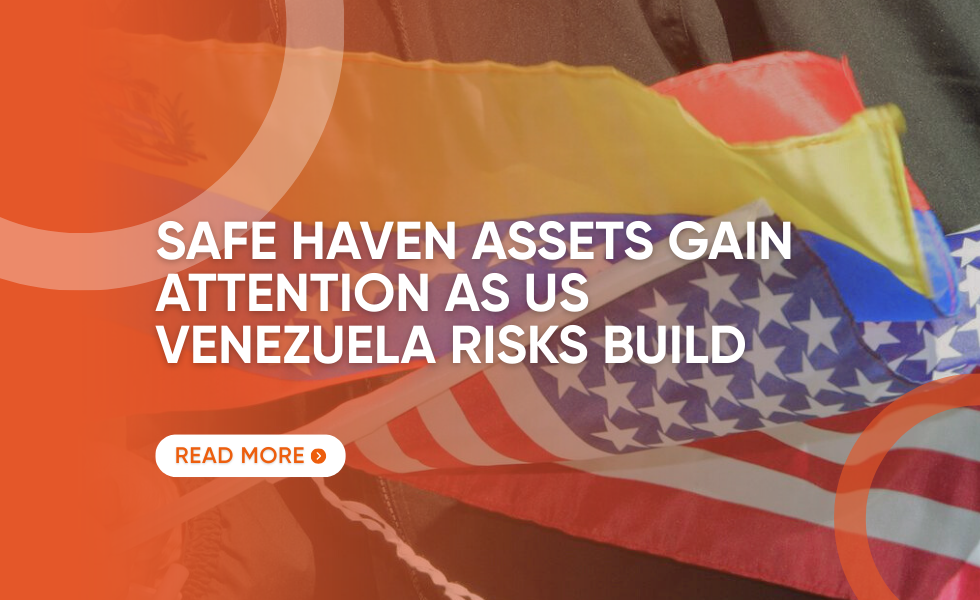
Over the weekend, the world woke up to breaking news that has sent shockwaves through global markets. The United States military launched a bold operation, “Operation Absolute Resolve,” capturing Venezuelan leader Nicolás Maduro and his wife, charging them with serious crimes. While the full implications remain unclear, the event has already sparked intense market reactions. Financial markets, accustomed to volatility but unsettled by sudden, unpredictable shifts in geopolitics, are bracing for what could follow. In this chaotic environment, investors are quickly seeking safety, shifting their focus from growth to protection.
Key Takeaways
-
The capture of Nicolás Maduro has heightened market uncertainty, increasing the likelihood of geopolitical risks.
-
As investors pull away from riskier assets, the shift toward “safe-haven” investments has intensified.
-
The US Dollar, Gold, and defensive assets are in the spotlight as the world watches the fallout.
-
In times of geopolitical shock, safe-haven assets are used more for risk management than speculative investment.
Safe-Haven Assets: The Shelter in a Financial Storm
When a geopolitical crisis strikes, safe-haven assets become the go-to choice for investors seeking refuge from uncertainty. These assets, while not immune to volatility, tend to hold their value or see increased demand when markets are shaken by global events like the recent US-Venezuela developments. Safe-haven assets such as Gold, the US Dollar, and the Japanese Yen are particularly attractive when risk-sensitive assets like equities or emerging market currencies are in freefall.
This move toward safety is more about managing risk than succumbing to fear. As political or economic outcomes become unpredictable, the primary driver of market positioning becomes uncertainty. With the US’s direct involvement in Venezuela’s affairs, markets are now pricing in the potential for further geopolitical disruptions, and the uncertainty of what comes next is dominating investor behavior.
How US-Venezuela Tensions Trigger Risk-Off Sentiment
The shock of the Maduro capture has sparked fear over Venezuela’s stability, energy flows, and potential international fallout. While the exact consequences remain to be seen, markets are already reacting to the possibility of further escalation. Even without definitive policy changes, the mere potential for sanctions, trade restrictions, or military escalation has created a cloud of uncertainty that investors are eager to avoid.
Markets, in turn, are retreating to safer assets. Stock prices are facing pressure as investors reconsider global growth prospects. Higher-risk currencies are seeing outflows, while capital is flocking to assets that are seen as more stable. This caution is not born of panic, but rather of prudent risk management in response to an unpredictable situation.
Safe-Haven Assets: A Risk Management Tool
In times of geopolitical turmoil, safe-haven assets are often regarded as essential tools for managing risk, rather than short-term investment opportunities. Gold, for example, is a time-tested store of value that remains unaffected by any single government or corporate balance sheet. The US Dollar, on the other hand, is widely seen as a liquidity anchor during periods of financial stress, particularly when global funding conditions tighten.
However, it is important to understand that safe havens are not a free pass from losses. While they may not entirely shield investors from downturns, their role is to reduce exposure to concentrated risks. In risk-off environments, the key is balance—investors seek to minimize risk while maintaining exposure to the broader market.
What This Means for Broader Markets
The fallout from the US-Venezuela crisis could reverberate across financial markets for weeks, if not months. Equity indices like the S&P 500 or the Dow Jones could experience continued volatility as headlines drive market sentiment. In the currency markets, we may see capital flowing into more defensive assets, while oil prices could fluctuate as fears about Venezuela’s energy infrastructure rise and fall.
If the crisis continues to escalate, the risk sensitivity of markets will likely remain heightened. Gold and other traditional hedges could continue to attract attention, as uncertainty about the situation persists. However, if the tensions ease or the situation stabilizes, risk appetite could quickly return, with markets snapping back as clarity replaces confusion.
What to Watch in the Coming Days
As the situation unfolds, all eyes will be on official statements from US and Venezuelan leaders. Any developments regarding sanctions, trade policies, or energy flows could send immediate ripples through the markets. Price movements in the US Dollar, gold, and major equity indices will be key indicators of shifting risk sentiment, as investors monitor how geopolitical tensions are affecting the broader economic outlook.
Market participants should also keep an eye on the broader shifts in volatility and cross-asset correlations. These changes could signal how investors are processing this uncertainty and whether markets are adjusting their positioning in response to a longer-term risk narrative.
For those seeking to stay ahead of the market moves, Profitech offers up-to-date market news and insights, focusing on how geopolitical events like the US-Venezuela crisis are shaping financial outcomes. Join our Profitech VIP Telegram channel for continuous updates, where we analyze market shifts and provide clear breakdowns of how global developments affect the financial landscape.