
An investor who placed $10,000 into PayPal stock in 2020 would now have about $1,685 left based on recent price levels. The sharp drop shows how quickly market conditions can change. During the pandemic period, PayPal was one of the most talked about technology companies. Digital payments were growing fast as more people shopped online and used mobile payment services. Investors believed the company would continue expanding at a rapid pace. Over time, economic conditions shifted and expectations became more cautious, which pushed the stock lower.
KEY TAKEAWAYS
- A $10,000 investment in PayPal in 2020 would be worth about $1,685 today
- The PayPal stock decline reflects changing market expectations and economic conditions
- Higher interest rates have placed pressure on many technology and growth stocks
- Competition in digital payments has increased over the past few years
- Forex traders watch these trends because shifts in market sentiment can affect currency markets
Why PayPal Became Popular During the Pandemic
In 2020, PayPal stock gained strong attention from investors. Lockdowns around the world pushed people toward online shopping and digital payments. Many consumers used mobile wallets and online payment platforms more often than before. As a result, companies involved in financial technology saw strong growth.
Interest rates were also very low during this period. When borrowing costs are low, investors often favor growth companies that promise higher earnings in the coming years. PayPal fit that description. The company already had millions of users, and many investors believed digital payments would continue expanding for a long time. These expectations pushed the stock price higher and increased demand for PayPal shares.
What Changed in the Market
The market environment began to change in the years that followed. Central banks raised interest rates to slow inflation. Higher interest rates tend to affect technology and growth stocks more than other sectors. Investors begin to focus more on current earnings instead of future growth.
Competition in the digital payments industry also increased. Large technology companies and new financial platforms expanded their services. Apple Pay, Google Pay, and other payment providers gained more users. This created more pressure in the market for online payment services.
Growth expectations also became more realistic. The rapid expansion seen during the pandemic period slowed as consumer behavior returned closer to normal patterns. When expectations adjust, stock prices often move lower as investors rethink valuations.
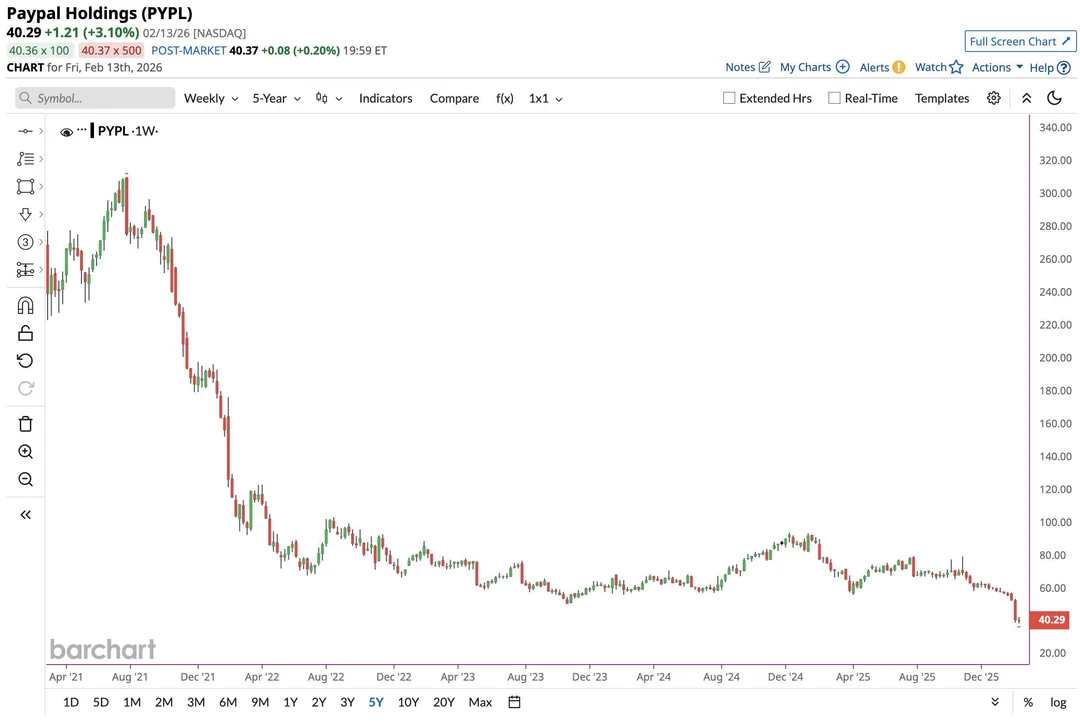
What the PayPal Example Shows About Market Cycles
The PayPal stock story reflects a common pattern in financial markets. When new technology or business trends appear, investors may push valuations higher based on strong expectations. If growth slows or economic conditions change, prices can decline just as quickly.
A $10,000 investment falling to about $1,685 shows how market cycles can affect even well-known companies. Investors often focus on strong growth stories during bullish periods. Later, they become more cautious when interest rates rise or economic uncertainty increases.
This example highlights the importance of diversification and risk awareness. Concentrating a large amount of money in a single company can lead to large losses if the market moves in the opposite direction. Understanding market cycles can help traders and investors make more balanced decisions.
Why This Story Matters for Forex Traders
Although PayPal is a technology stock, the factors behind its decline are closely linked to broader financial markets. Interest rate expectations, risk sentiment, and global capital flows play a major role in both stock markets and currency markets.
When central banks raise interest rates, global investors often move money toward assets that offer higher returns. This shift can strengthen certain currencies, especially the United States dollar. At the same time, changes in stock market sentiment can influence how investors manage risk.
Forex traders often monitor technology stocks and major market trends because they provide signals about investor confidence. When growth stocks decline, it may reflect tighter financial conditions or reduced risk appetite. These changes can affect currency pairs, capital flows, and global market sentiment.