

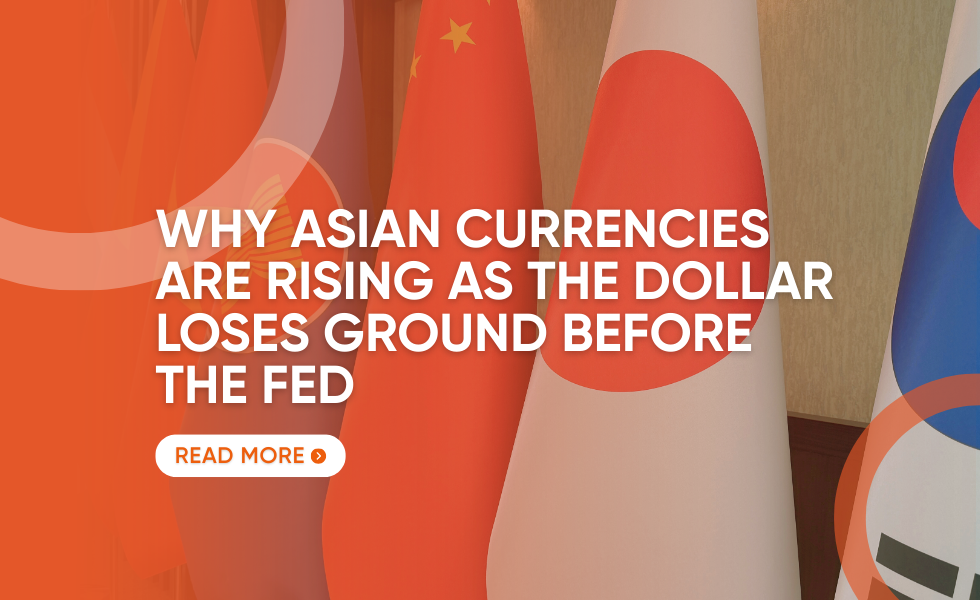
Asian currencies have been moving higher while the US dollar has been slipping in recent sessions. This shift is happening as traders around the world wait for signals from the Federal Reserve. When major central bank decisions approach, currency markets often react before any announcement is made. Understanding why this move is happening helps Forex traders make sense of short term price action rather than reacting emotionally.
Key Takeaways
- Asian currencies often rise when the US dollar weakens
- Traders reduce dollar exposure before Federal Reserve decisions
- Market expectations matter more than confirmed news ahead of the Fed
- Asian currency moves before the Fed are usually short term
- Watching dollar strength helps traders read Asian FX direction
What It Means When the Dollar Weakens
A weak dollar means that the US currency is losing value compared to other currencies. In Forex trading, currencies are always measured against each other. When the dollar falls, other currencies often rise by default.
This is why Asian currencies tend to gain when the dollar loses ground. It does not always mean that Asian economies suddenly improve. Many times, it simply means the dollar is under pressure.
Dollar weakness often shows up before big events like Federal Reserve meetings. Traders prefer to step back rather than hold strong positions when outcomes are uncertain.
Why Traders Are Careful Before the Federal Reserve
The Federal Reserve controls interest rates in the United States. Its decisions influence global markets, including currencies, stocks, and bonds. When a Fed meeting approaches, traders try to guess what policymakers might say or do.
Before these meetings, many traders reduce risk. Some close dollar positions to avoid sharp moves after the announcement. This reduced demand for the dollar can cause it to fall, even before any official statement is released.
This behavior is common and does not always reflect economic weakness. It reflects caution and positioning.
Why Asian Currencies React So Strongly
Asian currencies are closely tied to the US dollar through trade, investment, and global money flows. Many Asian economies export goods priced in dollars or receive investment from dollar based funds.
When the dollar weakens, pressure on Asian currencies eases. This allows them to rise more freely. Traders watching Asian FX often react quickly to changes in dollar strength.
This is why the topic of why Asian currencies are rising as the dollar loses ground before the Fed keeps appearing in market news. The connection between the two is direct and consistent.
Market Mood and Risk Behavior
Currency markets are influenced by how traders feel about risk. When traders feel calmer, they tend to move money away from safe currencies like the US dollar. When fear rises, the dollar often strengthens.
Before the Fed, uncertainty can reduce confidence in holding large positions. This can lead to lighter dollar demand and stronger performance from Asian currencies.
These moves are often short lived. Once the Fed speaks, markets usually reset based on the message delivered.
What Forex Traders Should Watch
Forex traders should watch overall dollar strength rather than focusing on one Asian currency alone. Broad dollar weakness usually lifts several Asian currencies at the same time.
Pay attention to price action before and after Federal Reserve announcements. Many pre Fed moves are driven by expectations rather than facts. Once the decision is known, markets often reverse or slow down.
Understanding why Asian currencies are rising as the dollar loses ground before the Fed helps traders stay patient and avoid chasing moves that may not last.