Oil prices in 2026 are facing steady pressure as global supply remains high and demand growth slows. Traders are also watching interest rate policy, inflation data, and geopolitical tensions that can shift sentiment quickly. The oil market outlook this year shows a mix of stable production and uncertain consumption patterns. These forces are shaping price swings in crude oil, currencies, and energy stocks.
KEY TAKEAWAYS
- Oil prices in 2026 are influenced by supply levels, demand growth, and geopolitical risks
- Higher production and slower economic growth can limit upward price movement
- Sudden global tensions can cause short-term price spikes
- Oil and forex correlation remains important, especially for USD and CAD
- Traders should monitor data releases and manage risk carefully
Oil Supply and Demand in 2026
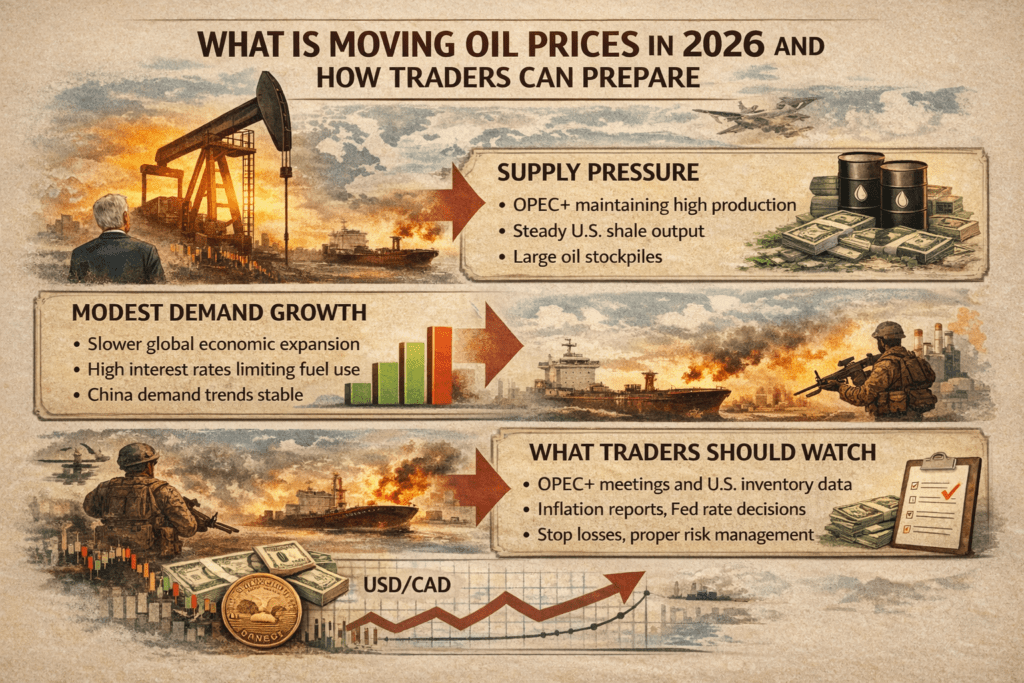
Oil supply and demand are the main forces behind price moves. In 2026, supply has stayed firm due to steady output from key producers. At the same time, global demand growth has been modest.
Slower economic expansion and high interest rates reduce fuel use in transport and industry. When economic activity slows, oil consumption increases more gradually. China’s economic data remains important, since changes there can shift global demand expectations.
Geopolitical Risks and Volatility
Geopolitical risks continue to influence oil prices in 2026. Conflicts, sanctions, or shipping disruptions can push prices higher in a short period. If tensions ease, those gains may reverse.
This creates volatility. Prices can move quickly in either direction. Traders need to understand that sudden headlines can shift sentiment even if supply and demand remain stable.
The US Dollar and Oil and Forex Correlation
Oil is priced in US dollars, so dollar strength affects prices. When the dollar rises, oil becomes more expensive for other countries. That can reduce demand and weigh on prices.
The oil and forex correlation is clear in USD/CAD. Canada exports oil, so falling oil prices can weaken the Canadian dollar. Rising oil prices may support it. Federal Reserve rate decisions also affect the dollar and shape the crude oil forecast.
Energy Stocks as Signals
Energy stocks reflect expectations about oil prices. Companies such as Exxon Mobil Corporation and Chevron Corporation often move in response to oil trends.
If oil prices remain soft, earnings expectations may weaken. If oil strengthens, investor interest in these companies may improve. Watching their reports can provide added context to the oil market outlook.
What Traders Should Watch in 2026
Traders should monitor OPEC+ meetings, US inventory data, inflation reports, and central bank decisions. These events can shift supply expectations, currency strength, and growth outlook.
Global economic indicators such as manufacturing and employment data also matter. When growth slows, oil demand may weaken. Following these reports helps traders build a clearer view of the crude oil forecast.
How Traders Can Prepare
Traders should focus on the core drivers of oil prices in 2026 before entering trades. Reviewing supply trends, demand data, and currency movements provides better context. Understanding oil supply and demand and the oil and forex correlation supports more informed decisions.
Risk management remains essential. Oil markets can move quickly during geopolitical events or major data releases. Using stop losses and controlling position size helps manage exposure in volatile conditions.
Oil prices in 2026 are shaped by steady supply, moderate demand growth, currency movements, and global tensions. Traders who track these factors and stay disciplined can prepare more effectively for market changes.