

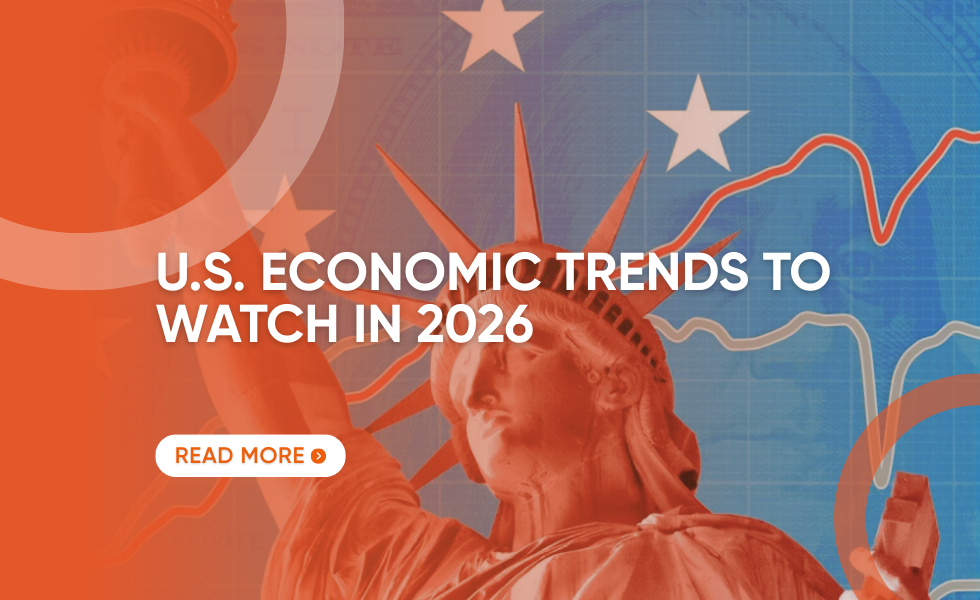
The U.S. economy in 2026 is expected to move at a slower and more careful pace than in recent years. After a stretch marked by high inflation, rising interest rates, and strong job growth, many parts of the economy are settling into a more balanced phase. Growth is still expected, but it may feel uneven depending on where people live and work.
For households, workers, and businesses, 2026 is less about sudden shocks and more about steady shifts. Jobs, prices, borrowing costs, and spending habits will continue to change. Knowing which trends matter can help readers better understand everyday financial decisions and economic news.
KEY TAKEAWAYS
- Economic growth may continue at a slower and steadier pace
- Job hiring may cool even if unemployment stays fairly low
- Inflation may ease, though many everyday costs may stay high
- Interest rates may come down gradually but remain higher than past decades
- Household spending may focus more on needs than extras
Economic Growth in 2026
Economic growth refers to how much the country produces and earns over time. In 2026, growth in the U.S. economy is expected to continue, but not as quickly as in earlier recovery years. Many forecasts point to moderate growth rather than a sharp slowdown.
A slower pace does not mean the economy is shrinking. It means businesses and consumers may act with more care. Fewer large expansions and fewer fast hiring plans can still support growth, just in a calmer way that feels more stable to many people.
Jobs and the Labor Market
The labor market is expected to remain stable in 2026, though it may feel less tight than before. In recent years, employers competed heavily for workers. That pressure may ease as hiring slows in some industries.
Unemployment could rise slightly even if the economy continues to grow. This often happens when companies pause hiring rather than lay off workers. Wage growth may also cool, which can affect how quickly household incomes rise.
Inflation and Everyday Prices
Inflation describes how fast prices rise over time. In 2026, inflation is expected to move closer to levels seen before the pandemic. This means prices may rise more slowly than in recent years.
Even with slower inflation, many costs may remain high. Groceries, rent, insurance, and utilities may continue to take up a large share of household budgets. For many families, this can mean financial pressure still feels real despite calmer inflation data.
Interest Rates and Borrowing Costs
Interest rates shape how much people pay to borrow money. This includes credit cards, car loans, home loans, and business financing. In 2026, rates may move lower than recent highs, but they are expected to stay above the very low levels seen in the past.
Higher borrowing costs can affect major decisions such as buying a home or starting a business. Even people who are not borrowing may feel the impact through housing costs, rent levels, and slower business activity.
Consumer Spending and Household Budgets
Consumer spending plays a major role in the U.S. economy. In 2026, many households may spend more carefully. Higher living costs and borrowing rates can lead people to focus more on essentials.
Spending habits may shift toward value focused choices. This does not mean spending stops, but it can change where money goes. Retailers and service providers may see mixed results as families adjust their priorities.
Housing and Rent Trends
Housing remains one of the most closely watched areas of the economy. In 2026, high mortgage rates and limited housing supply may continue to shape the market. Fewer people may buy homes, while renting remains common.
Rent prices may rise more slowly than before, but they may still feel expensive in many areas. New construction could help ease pressure in some regions, though outcomes will vary widely by location.
Business Activity and Investment
Businesses often adjust hiring and spending plans based on economic conditions. In 2026, many companies may focus on steady operations rather than fast expansion. Spending on technology and equipment may continue, but with closer attention to costs.
These choices can affect job growth and wages. When companies move carefully, changes usually happen gradually. This can support stability, even if it limits rapid gains.
Risks and Uncertainty to Watch
Economic forecasts depend on current information, and conditions can change. Global events, policy decisions, or financial stress can affect growth, prices, and markets. That is why economists often focus on trends rather than single predictions.
For readers, staying informed helps reduce uncertainty. Understanding how large economic forces connect to daily life makes the news easier to follow and less overwhelming.
Conclusion
The U.S. economic trends to watch in 2026 point to a year shaped by slower growth, careful spending, and gradual change rather than sudden shifts. Jobs, prices, interest rates, and housing will continue to affect everyday decisions for households and businesses alike. Keeping track of these trends helps readers better understand how the economy connects to their own financial lives.