
Oil prices are rising again as tensions in the Middle East raise concern about global energy supply. Traders are paying close attention because the region produces a large share of the world’s crude oil. When conflict grows in major oil producing areas, markets often react quickly. This recent oil price surge has pushed energy costs higher and shifted attention back to inflation and global market stability. As a result, the forex market reaction to oil is becoming an important focus for currency traders.
KEY TAKEAWAYS
- Oil prices moved higher as the Middle East conflict increased oil supply risk.
- Higher energy costs may slow the decline in global inflation.
- Currency markets are reacting as traders reconsider interest rate expectations.
- Oil linked currencies may gain while oil importing countries may face pressure.
- Forex traders are watching geopolitical news, oil supply updates, and central bank signals.
Why Oil Prices Are Rising During the Conflict
The oil prices Middle East conflict story centers on supply concerns. The Middle East is one of the most important oil producing regions in the world. When conflict expands in this region, markets worry that exports could slow or shipping routes may be affected.
One major route traders watch is the Strait of Hormuz. A large share of global oil shipments moves through this narrow waterway. If conflict threatens this route, traders often react quickly by buying oil. Even the possibility of disruption can move the market.
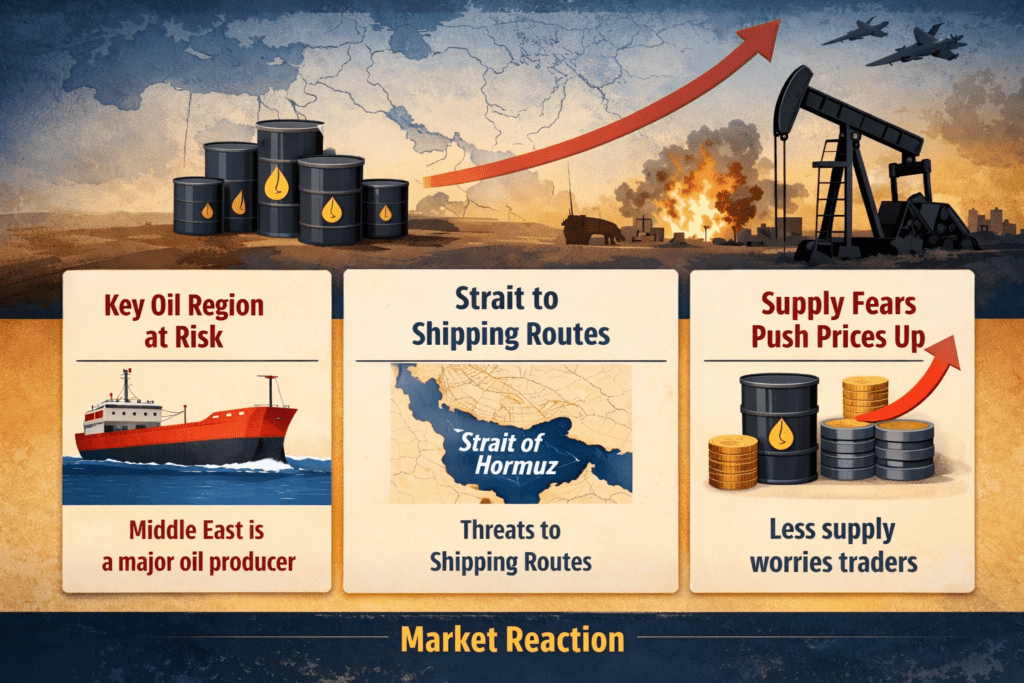
This situation explains the recent oil price surge. Energy traders are adjusting prices to reflect the risk that supplies could become tighter if the conflict worsens. The move higher in oil is already influencing global markets reaction across stocks, commodities, and currencies.
How Global Markets Are Responding
Higher oil prices often create wider economic effects. When energy becomes more expensive, transport and production costs can increase. These rising costs can push inflation higher again, especially in countries that rely on imported oil.
This is why the impact of oil and inflation risk is receiving attention from central banks and financial markets. If inflation stays high, central banks may keep interest rates elevated for longer than expected. That possibility has already changed expectations in several markets.
At the same time, geopolitical tension tends to raise uncertainty in financial markets. Investors may move money into safer assets when conflict grows. These shifts in capital flows often appear first in the currency market.
Impact on the Forex Market
The forex market reaction to oil can be significant when energy prices move sharply. Some currencies are closely linked to oil exports. Canada is a clear example because oil is one of the country’s largest exports.
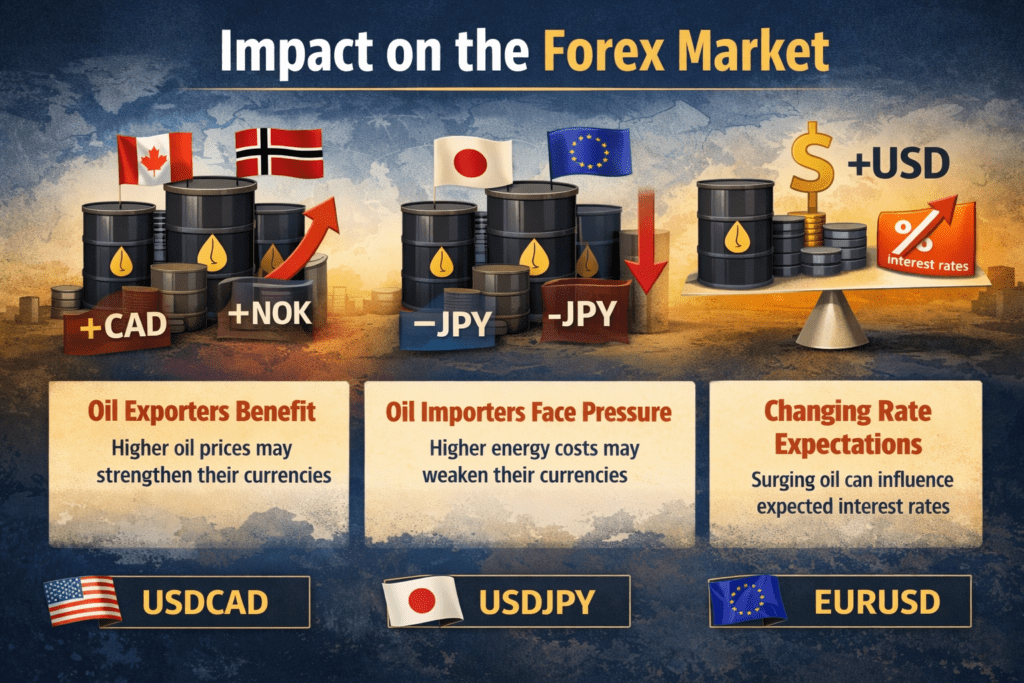
When oil prices climb, the Canadian dollar may gain support. Traders often watch the USDCAD pair during periods of strong oil movement. If crude prices continue to rise, the Canadian dollar can strengthen against the US dollar.
Other currencies may move in the opposite direction. Countries that import large amounts of oil often face higher economic costs when energy prices rise. Japan is one example. This is why the USDJPY pair sometimes reacts when oil prices increase.
Oil prices can also influence the US dollar through inflation expectations. If energy prices push inflation higher, traders may expect central banks to keep interest rates higher for longer. These expectations often affect major pairs such as EURUSD.
What Forex Traders Should Watch Next
Forex traders should monitor several developments in the coming weeks. The first is how the Middle East conflict evolves. Any escalation may raise Middle East oil supply risk further and push energy prices higher.
Another key factor is oil supply and shipping activity. Markets will watch for signs that exports or transport routes are being disrupted. Governments may also release oil reserves if prices rise too quickly.
Economic data will also play an important role. Inflation reports from major economies may show whether higher energy prices are affecting consumer costs. Central bank comments about interest rates will also shape currency market expectations.