
Financial markets respond quickly to global events. Economic reports, oil prices, and political tensions can all affect the value of currencies. Last week, traders focused on rising tensions involving Iran, Israel, and the United States, which pushed oil prices higher and raised concerns about inflation. At the same time, economic data from the United States and other major economies gave mixed signals about global growth. This weekly market update looks at what happened last week and what forex traders may watch in the days ahead.
Key Takeaways
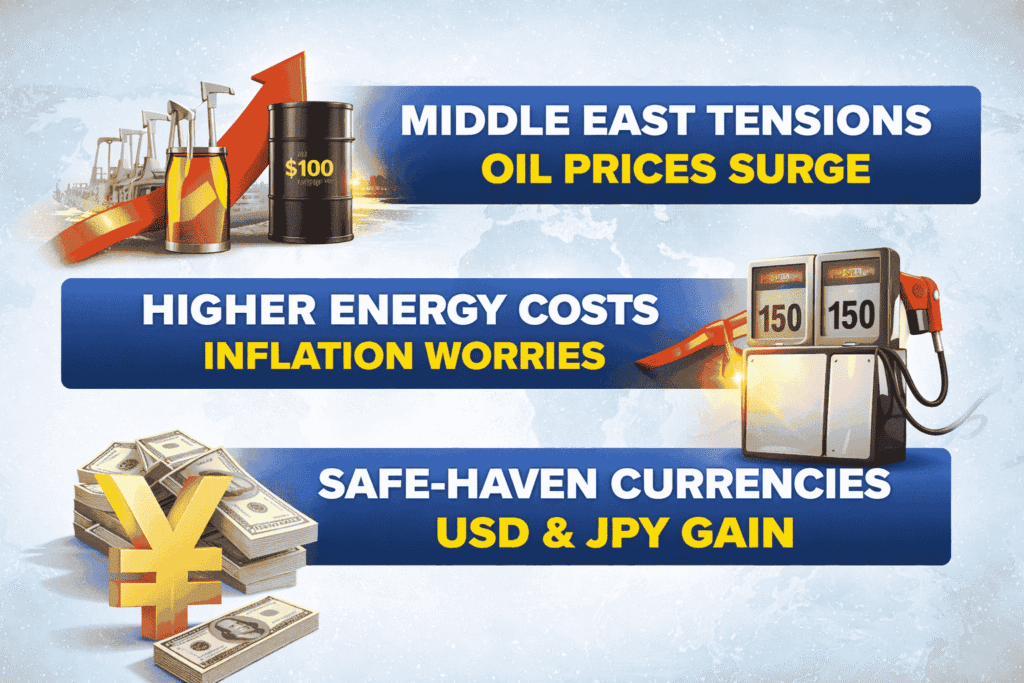
- Rising tensions in the Middle East pushed oil prices higher, increasing concerns about inflation.
- Higher energy costs can affect transportation, production, and consumer prices around the world.
- Safe currencies such as the U.S. dollar and Japanese yen gained attention during periods of uncertainty.
- Inflation data and economic reports may influence the direction of the forex market this week.
- Oil prices and geopolitical developments remain important drivers of market sentiment.
Global Market Overview Last Week
Markets were mainly influenced by geopolitical developments and energy prices. Tensions between Iran, Israel, and the United States raised concerns about possible disruptions in oil supply. Oil prices moved higher during the week as traders reacted to the risk that shipping routes or energy facilities could be affected.
Oil plays a key role in the global economy. When oil prices rise, the cost of fuel and transportation often increases. These higher costs can spread across industries, which may lead to higher prices for goods and services. This process is one reason why rising oil prices often raise concerns about inflation.
Global stock markets also reacted to the uncertainty. Some investors moved money into assets that are often viewed as safer during periods of geopolitical tension. This shift can influence both commodity markets and the forex market.
Key Economic Data from Last Week
Economic data from the United States provided mixed signals about the strength of the economy. The U.S. jobs report showed slower job growth compared with previous months. Nonfarm payrolls measure the number of jobs added or lost in the economy outside the farming sector. A slower pace of hiring can sometimes signal cooling economic activity.
At the same time, business activity reports suggested that parts of the economy are still expanding. Surveys of manufacturing and services activity remained above the level that usually signals growth. These reports measure how companies view new orders, production, and business conditions.
Together, these releases created a mixed picture. Economic activity is still present, yet concerns about inflation and energy costs remain.
Forex Market Reaction
The forex market reacted to both economic data and geopolitical risk. During periods of uncertainty, traders often look for currencies that are considered safer. The U.S. dollar and Japanese yen are two examples of currencies that can gain attention during risk-off sentiment.
Risk-off sentiment describes a period when investors reduce exposure to assets that are considered more volatile. Instead, they may move toward assets that are seen as more stable during uncertain times.
Commodity-linked currencies also moved with oil prices. The Canadian dollar, which is linked to energy exports, can respond when oil prices rise. Meanwhile, currencies that depend more on global growth can face pressure if markets expect slower economic activity.
Key Events to Watch This Week
Several economic releases may shape the direction of the forex market this week. One of the most closely watched reports is the U.S. Consumer Price Index. CPI measures changes in the prices consumers pay for goods and services and is widely used to track inflation.
Inflation data matters because central banks often adjust interest rates in response to price changes. Interest rates influence currency values because they affect investment flows between countries.
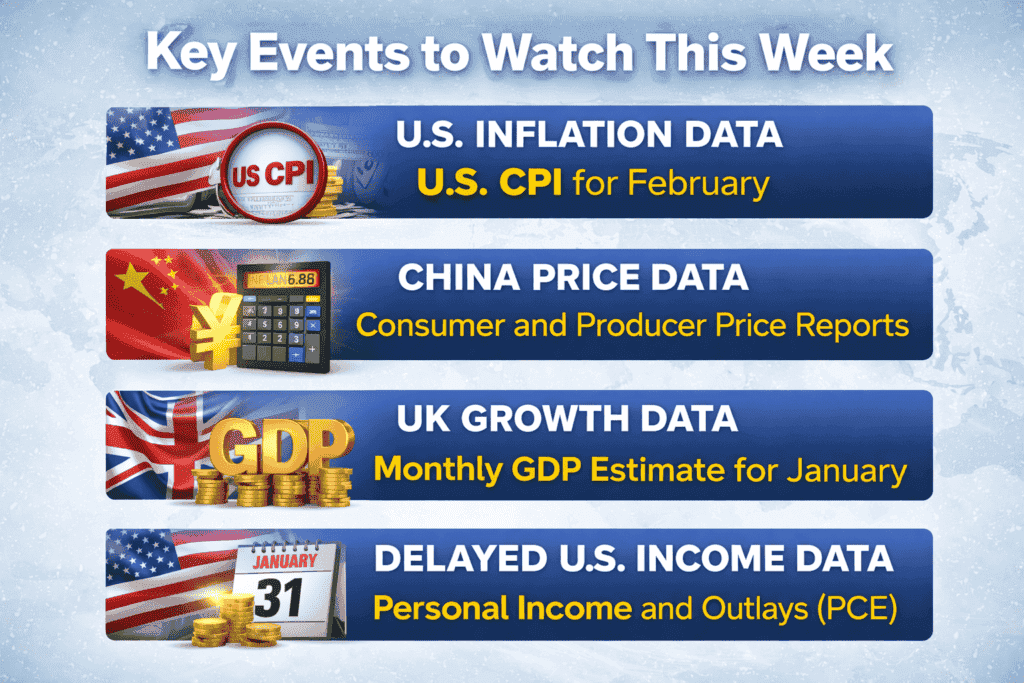
Traders may also watch inflation data from China and economic growth data from the United Kingdom. These reports provide insight into global demand and economic stability.
Energy markets will remain important as well. Oil prices may continue to react to developments in the Middle East. Any changes in supply expectations or shipping conditions could influence commodity prices and inflation expectations.
Markets to Watch
Several markets may remain in focus during the week.
Major currency pairs such as EUR USD, GBP USD, and USD JPY often respond to economic data and shifts in risk sentiment. Movements in these pairs can reflect changes in interest rate expectations or global market conditions.
Commodities such as oil and gold may also attract attention. Oil is closely linked to inflation and global supply concerns, while gold is often watched during periods of uncertainty.
Stock indices and major cryptocurrencies can also react to global news. Changes in market sentiment often influence several asset classes at the same time.
Summary
The Iran-Israel-U.S. conflict is now a key global macro driver. Its biggest economic impact comes through oil supply risk, which can increase energy prices and inflation. When inflation fears return, markets often move toward safer assets while currencies and stock indices react quickly. For traders, the coming week will likely be driven by geopolitical news, oil price movements, and inflation data.
Disclaimer: This note is for informational and educational purposes only and does not constitute financial advice. Trading involves risk, and you should conduct your own analysis or consult a professional before making any trading decisions.